Sunday, May 24, 2020
|

Sunday, May 24, 2020
|


See as well a 2019 Neal Stephenson novel —
From a New York Times review of that novel:
"Early choices, or sometimes relatively arbitrary initial conditions,
end up shaping future events and technologies. In this case,
the cosmology, topography and even the theology of an entire
universe — Bitworld — affect Meatspace, and the two realms
are linked in a feedback loop of cause and effect, resources and
outcomes (dollars, computing power)."
— Charles Yu, June 14, 2019
“If we ended Part 1 proud of our accomplishment—
perhaps even a little smug—then we will get reacquainted
with our humility in this article.” — Robert Jacobson
Related to the grammar of operators —
Online biography of author Cormac McCarthy—
"… he left America on the liner Sylvania, intending to visit
the home of his Irish ancestors (a King Cormac McCarthy
built Blarney Castle)."
Two Years Ago:
Blarney in The Harvard Crimson—
Melissa C. Wong, illustration for "Atlas to the Text,"
by Nicholas T. Rinehart:

Thirty Years Ago:
Non-Blarney from a rural outpost—
Illustration for the generalized diamond theorem,
by Steven H. Cullinane:

From the final pages of the new novel
Lexicon , by Max Barry:
|
"… a fundamental language
"… the questions raised by R. Lowell |

"… the clocks were striking thirteen." — 1984
Fom last night's Afterglow post . . .

This suggests a review. Earlier in this journal —
|
“The Platters were singing ‘Each day I pray for evening just to be with you,’ and then it started to happen. The pump turns on in ecstasy. I closed my eyes, I held her with my eyes closed and went into her that way, that way you do, shaking all over, hearing the heel of my shoe drumming against the driver’s-side door in a spastic tattoo, thinking that I could do this even if I was dying, even if I was dying, even if I was dying; thinking also that it was information. The pump turns on in ecstasy, the cards fall where they fall, the world never misses a beat, the queen hides, the queen is found, and it was all information.”
— Stephen King, Hearts in Atlantis, August 2000 |
A related "Lex-Icon" . . .
| Hex | Rex |
| Sex | Lex |

The above date of a letter from Kurt Gödel — 7 January 1954 —
appears also in an instance of the word "artified" that seems* to be
outside the usual realms of English usage —

* Related "artified" references — Try a Google Books search and . . .

Morf Vandewalt might enjoy the bibliography from Dreon's article.

To me, the new URL "Songlines.space" suggests both the Outback
and the University of Western Australia. For the former, see
"'Max Barry' + Lexicon" in this journal. For the latter, see SymOmega.
The new URL forwards to a combination of these posts.

A Letterman introduction for Plato's Academy Awards:
"Cunning, Anna. Anna, Cunning." (Rimshot.)
But seriously . . .
"This work [of Wierzbicka and colleagues] has led to
a set of highly concrete proposals about a hypothesized
irreducible core of all human languages. This universal core
is believed to have a fully ‘language-like’ character in the sense
that it consists of a lexicon of semantic primitives together with
a syntax governing how the primitives can be combined
(Goddard, 1998)." — Wikipedia, Semantic Primes
Goddard C. (1998) — Bad arguments against semantic primitives.
Theoretical Linguistics 24:129-156.
Related fiction . . . Lexicon , by Max Barry (2013). See Barry in this journal.

Clue
Here is a midrash on “desmic,” a term derived from the Greek desmé
( δέσμη: bundle, sheaf , or, in the mathematical sense, pencil —
French faisceau ), which is related to the term desmos , bond …

(The term “desmic,” as noted earlier, is relevant to the structure of
Heidegger’s Sternwürfel .)
“Gadzooks, I’ve done it again!” — Sherlock Hemlock

A Lexicon for Housman — See the posts of June 21, 2013.

|
“All right, Jessshica. It’s time to open the boxsssschhh.” “Gahh,” she said. She began to walk toward the box, but her heart failed her and she retreated back to the chair. “Fuck. Fuck.” Something mechanical purred. The seam she had found cracked open and the top of the box began to rise. She squeezed shut her eyes and groped her way into a corner, curling up against the concrete and plugging her ears with her fingers. That song she’d heard the busker playing on the train platform with Eliot, “Lucy in the Sky with Diamonds”; she used to sing that. Back in San Francisco, before she learned card tricks. It was how she’d met Benny: He played guitar. Lucy was the best earner, Benny said, so that was mainly what she sang. She must have sung it five times an hour, day after day. At first she liked it but then it was like an infection, and there was nothing she could do and nowhere she could go without it running across her brain or humming on her lips, and God knew she tried; she was smashing herself with sex and drugs but the song began to find its way even there. One day, Benny played the opening chord and she just couldn’t do it. She could not sing that fucking song. Not again. She broke down, because she was only fifteen, and Benny took her behind the mall and told her it would be okay. But she had to sing. It was the biggest earner. She kind of lost it and then so did Benny and that was the first time he hit her. She ran away for a while. But she came back to him, because she had nothing else, and it seemed okay. It seemed like they had a truce: She would not complain about her bruised face and he would not ask her to sing “Lucy.” She had been all right with this. She had thought that was a pretty good deal. Now there was something coming out of a box, and she reached for the most virulent meme she knew. “Lucy in the sky!” she sang. “With diamonds!” • • •
Barry, Max. Lexicon: A Novel (pp. 247-248). |

|
“All right, Jessshica. It’s time to open the boxsssschhh.” “Gahh,” she said. She began to walk toward the box, but her heart failed her and she retreated back to the chair. “Fuck. Fuck.” Something mechanical purred. The seam she had found cracked open and the top of the box began to rise. She squeezed shut her eyes and groped her way into a corner, curling up against the concrete and plugging her ears with her fingers. That song she’d heard the busker playing on the train platform with Eliot, “Lucy in the Sky with Diamonds”; she used to sing that. Back in San Francisco, before she learned card tricks. It was how she’d met Benny: He played guitar. Lucy was the best earner, Benny said, so that was mainly what she sang. She must have sung it five times an hour, day after day. At first she liked it but then it was like an infection, and there was nothing she could do and nowhere she could go without it running across her brain or humming on her lips, and God knew she tried; she was smashing herself with sex and drugs but the song began to find its way even there. One day, Benny played the opening chord and she just couldn’t do it. She could not sing that fucking song. Not again. She broke down, because she was only fifteen, and Benny took her behind the mall and told her it would be okay. But she had to sing. It was the biggest earner. She kind of lost it and then so did Benny and that was the first time he hit her. She ran away for a while. But she came back to him, because she had nothing else, and it seemed okay. It seemed like they had a truce: She would not complain about her bruised face and he would not ask her to sing “Lucy.” She had been all right with this. She had thought that was a pretty good deal. Now there was something coming out of a box, and she reached for the most virulent meme she knew. “Lucy in the sky!” she sang. “With diamonds!” • • •
Barry, Max. Lexicon: A Novel (pp. 247-248). |
Related material from Log24 on All Hallows' Eve 2013 —

"Just another shake of the kaleidoscope" —
Related material:
Kaleidoscope Puzzle,
Design Cube 2x2x2, and
Through the Looking Glass: A Sort of Eternity.
“… I realized that to me, Gödel and Escher and Bach
were only shadows cast in different directions
by some central solid essence.
I tried to reconstruct the central object . . . ."
— Douglas Hofstadter (1979)
See also posts of July 23, 2007, and April 7, 2018.
* Term from a visual-culture lexicon —

See Solomon Marcus in this journal.
Related art —

Related fictions: The Seventh Function of Language (2017)
and Lexicon (2013). I prefer Lexicon .
Alah — עָלָה
Aliyah — עֲלִיָּה
Olah — עֹלָה
Related reading —
"Then a 12-14-day Trans-Siberian train ride to Vladivostok . . . ."
— "My First Halloween After Escaping the Nazis,"
By Masha Leon, October 29, 2015.
Leon reportedly died in her sleep at 86 in Manhattan on the
morning of Wednesday, April 5, 2017.
Other related reading:


The title was suggested by a Wallace Stevens poem.
See "The Thing and I" in this journal. See also
Words and Objects according to Whorf —

— Page 240 of Language, Thought, and Reality , MIT, 1956,
in the article "Languages and Logic," reprinted from
Technol. Rev. , 43: 250-252, 266, 268, 272 (April 1941)
The author of the review in the previous post, Dara Horn, supplies
below a midrash on "desmic," a term derived from the Greek desmé
( δέσμη: bundle, sheaf , or, in the mathematical sense, pencil —
French faisceau ), which is related to the term desmos , bond …
(The term "desmic," as noted earlier, is relevant to the structure of
Heidegger's Sternwürfel .)
The Horn midrash —

(The "medieval philosopher" here is not the remembered pre-Christian
Ben Sirah (Ecclesiasticus ) but the philosopher being read — Maimonides:
Guide for the Perplexed , 3:51.)
Here of course "that bond" may be interpreted as corresponding to the
Greek desmos above, thus also to the desmic structure of the
stellated octahedron, a sort of three-dimensional Star of David.
See "desmic" in this journal.
From an earlier Log24 post —
Friday, July 11, 2014
|
From a post of the next day, July 12, 2014 —

"So there are several different genres and tones
jostling for prominence within Lexicon :
a conspiracy thriller, an almost abstract debate
about what language can do, and an ironic
questioning of some of the things it’s currently used for."
— Graham Sleight in The Washington Post
a year earlier, on July 15, 2013
For the Church of Synchronology, from Log24 on the next day —

From a post titled Circles on the date of Marc Simont's death —

See as well Verhexung in this journal.
For Dan Brown enthusiasts, a sequel to the previous post, "The Tombstone Source."
As that post notes, the following symbol is now used as a story-end "tombstone" at
T: The New York Times Style Magazine. The Times uses style-sheet code, not
the rarely used unicode character below, to produce the tombstone.

Related material — The novel The Flame Alphabet by Ben Marcus
that was reviewed in January 2012 by Commentary magazine :
Fiction, Fiction, Burning Bright
D. G. MYERS / JAN. 19, 2012
Ben Marcus, The Flame Alphabet
(New York: Alfred A. Knopf, 2012).
304 pp. $25.95.
According to the Jews, the world begins
with speech. God says, “There is light,”
and so there is light. But what if something
happened — it doesn’t really matter what —
and speech turned lethal?
That’s the premise of The Flame Alphabet ,
the third novel by Ben Marcus,
a creative writing professor at Columbia
University….
A much better novel along these lines is Lexicon (2013) by Max Barry.
From a French dictionary —
|
Tintement lent, sur une seule note,
d’une cloche d’église pour annoncer l’agonie, la mort ou les obsèques de quelqu’un. |
” I go, and it is done: the bell invites me.
Hear it not, Duncan, for it is a knell
That summons thee to heaven, or to hell. “
From a French dictionary —
|
A. − HIST. Signe de croix, marque ou signature apposé(e)
au bas d'une lettre, d'un document, par celui qui veut attester la validité, l'authenticité de son contenu. |
From Glas , by Jacques Derrida —

Continued from Epiphany* —
Today's New York Times Word of the Day is "lexicon."

* The word "lexicon" appeared in a Log4 post of Epiphany, 2014, but
only within a link— "a bareword "— to a search for Barry + Lexicon.
"… the human will cannot be simultaneously
triumphant and imaginary."
— Ross Douthat, Defender of the Faith,
in this afternoon's New York Times at 3:25* PM ET
Some— even some Catholics— might say the will
cannot be triumphant unless imaginary.
Related material: The Galois Quaternion: A Story.
See also C. S. Lewis on enchantment.
* Cf., in this journal, the most recent 3/25 ,
and a bareword —

Click image for some context.
"If I am to have a meeting it shall be down,
down in the invisible,
and the moment I re-emerge
it shall be alone.
In the visible world I am alone, an isolate instance.
My meeting is in the underworld, the dark."
— D. H. Lawrence, Kangaroo , Chapter 7,
"The Battle of Tongues."
The web edition of this book says it was
"Last updated Tuesday, June 18, 2013."
This was also the publication date of Max Barry's
2013 novel Lexicon . (See that date in this journal.)
In memory of Douglas J. Dayton, who reportedly died last Friday—
The Studio of Gratifying Discourse.
See also Barry's Lexicon and (for The Blake School)…

From the LA Times online obituaries today:
|
Michael Feran Baigent was born in Nelson, New Zealand,
From 1998 he lectured on and led tours of the temples and Elliott Reid Longtime film, TV actor with a comic touch
Elliott "Ted" Reid, 93, a longtime character actor in films |
From a post last Saturday, June 22, and the earlier
post last Friday, June 21, that preceded it:
|
The Eliade passage was quoted in a 1971 Ph.D. thesis Some context— Stevens's Rock in this journal. Friday, June 21, 2013
Lexicon
|
|
"… a fundamental language
"… the questions raised by R. Lowell |
See also, in this journal, Big Rock.
From today's earlier post, Stevens and the Rock—
"Rock shows him something that transcends
the precariousness of his humanity:
an absolute mode of being.
Its strength, its motionlessness, its size
and its strange outlines
are none of them human;
they indicate the presence of something
that fascinates, terrifies, attracts and threatens,
all at once."
— Mircea Eliade, Patterns in Comparative Religion (1958)
An object with such an "absolute mode of being"
is the plot center of a new novel discussed here previously—
Max Barry's Lexicon . From a perceptive review:
I believe he’s hit on something special here.
It’s really no surprise that Matthew Vaughn
of Kick-Ass and X-Men: First Class fame
has bought the rights to maybe make the movie;
Lexicon certainly has the makings of a fine film.
Or graphic novel… Whatever.

Passage quoted in A Philosopher's Stone (April 4, 2013)—

This passage from Heidegger suggested the lexicon excerpt on
to hypokeimenon (the underlying) in yesterday's post Lexicon.
A related passage:

The Eliade passage was quoted in a 1971 Ph.D. thesis
on Wallace Stevens.
Some context— Stevens's Rock in this journal.


This journal on May 14, 2013:

"And let us finally, then, observe the
parallel progress of the formations of thought
across the species of psychical onomatopoeia
of the primitives, and elementary symmetries
and contrasts, to the ideas of substances,
to metaphors, the faltering beginnings of logic,
formalisms, entities, metaphysical existences."
— Paul Valéry, Introduction to the Method of
Leonardo da Vinci
But first, a word from our sponsor…

For those who prefer Trudeau's
"Story Theory" of truth to his "Diamond Theory"

Related material: Click images below for the original posts.


See as well the novel "Lexicon" at Amazon.com
and the word "lexicon" in this journal.
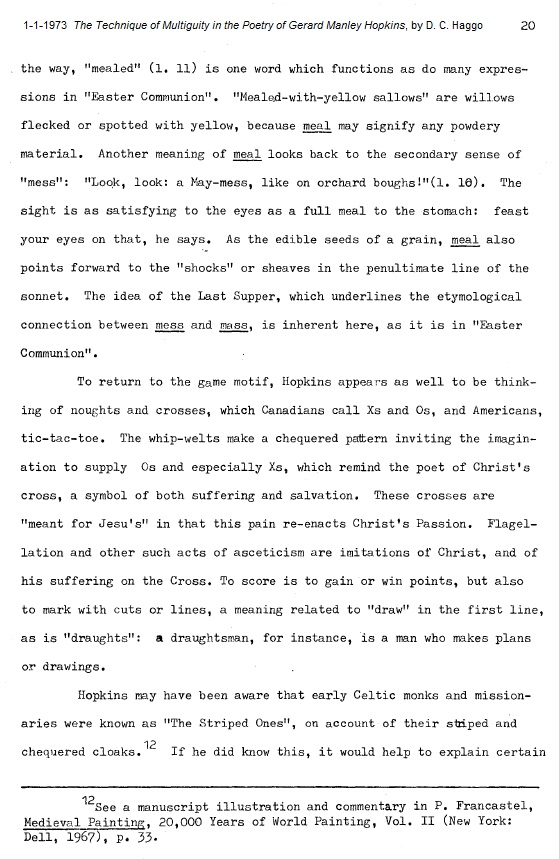
For this, the dies natalis of poet Gerard Manley Hopkins,
it seems apt to cite a 1973 master's thesis on what the author
calls multiguity in Hopkins.
See also multispeech in this journal.
Related material:
See, too, the online front page of The New York Times
from 1:54 PM ET today, and, as an example of multispeech,
yesterday morning's post Rubric's Cuber.
Yesterday's noon post concerned a forthcoming novel
about poetry and intelligence services. Some related backstory:
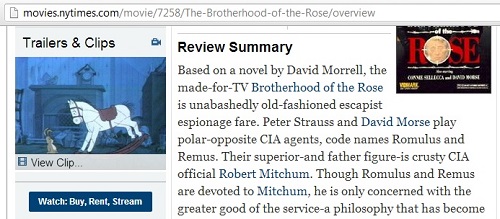
A predecessor to the Max Barry novel Lexicon .
(The latter will be published on June 18.)


See, too, an MAA Spectrum book:

Click on images for details.
"Core" (in the original, Kern ) is perhaps
not the best translation of hypokeimenon :
See also Heidegger's original German:

Related material: In this journal, "underlie" and "underlying."

Some background from today's New York Times—

From DeLillo's novel Mao II in the paragraph immediately preceding
the Ritz-hat passage quoted by Soltan—
"He could have told George he was writing about the hostage to bring him back, to return a meaning that had been lost to the world when they locked him in that room. Maybe that was it. When you inflict punishment on someone who is not guilty, when you fill rooms with innocent victims, you begin to empty the world of meaning and erect a separate mental state, the mind consuming what's outside itself, replacing real things with plots and fictions. One fiction taking the world narrowly into itself, the other fiction pushing out toward the social order, trying to unfold into it. He could have told George a writer creates a character as a way to reveal consciousness, increase the flow of meaning. This is how we reply to power and beat back our fear. By extending the pitch of consciousness and human possibility. This poet you've snatched. His detention drains the world of one more thimble of meaning."
For related ways of draining the world of meaning, see the politically loaded leftist vocabulary of International Art English—
IAE has a distinctive lexicon: aporia , radically , space , proposition , biopolitical , tension , transversal , autonomy . An artist’s work inevitably interrogates, questions, encodes, transforms, subverts, imbricates, displaces—though often it doesn’t do these things so much as it serves to, functions to, or seems to (or might seem to) do these things. [Alix Rule and David Levine, July 30, 2012]
See also this evening's post Issue 16.
From triplecanopy, Issue 16 —
International Art English, by Alix Rule and David Levine (July 30, 2012)
… In what follows, we examine some of the curious lexical, grammatical, and stylistic features of what we call International Art English. We consider IAE’s origins, and speculate about the future of this language through which contemporary art is created, promoted, sold, and understood. Some will read our argument as an overelaborate joke. But there’s nothing funny about this language to its users. And the scale of its use testifies to the stakes involved. We are quite serious….*
…
Space is an especially important word in IAE and can refer to a raft of entities not traditionally thought of as spatial (the space of humanity ) as well as ones that are in most circumstances quite obviously spatial (the space of the gallery ). An announcement for the 2010 exhibition “Jimmie Durham and His Metonymic Banquet,” at Proyecto de Arte Contemporáneo Murcia in Spain, had the artist “questioning the division between inside and outside in the Western sacred space”—the venue was a former church—“to highlight what is excluded in order to invest the sanctum with its spatial purity. Pieces of cement, wire, refrigerators, barrels, bits of glass and residues of ‘the sacred,’ speak of the space of the exhibition hall … transforming it into a kind of ‘temple of confusion.’”
Spatial and nonspatial space are interchangeable in IAE. The critic John Kelsey, for instance, writes that artist Rachel Harrison “causes an immediate confusion between the space of retail and the space of subjective construction.” The rules for space in this regard also apply to field , as in “the field of the real”—which is where, according to art historian Carrie Lambert-Beatty, “the parafictional has one foot.” (Prefixes like para -, proto -, post -, and hyper – expand the lexicon exponentially and Germanly, which is to say without adding any new words.) It’s not just that IAE is rife with spacey terms like intersection , parallel , parallelism , void , enfold , involution , and platform ….
* Footnote not in the original—
See also Geometry and Death from the date of the above article.
MEDEIS AGEOMETRETOS EISITO
— Inscription at entrance to
Plato's Academy, according to
an elementary introduction to
philosophy by James L. Christian
For Irving Adler, who reportedly
died on September 22, 2012—
|
|
Background: See Sangaku in this journal.
See also the following, from a different
elementary introduction, by Adler—
Giant Golden Book of Mathematics,
illustrated by Lowell Hess—
 .
.
(Detail of Flickr photo)
* See Liddell and Scott.
In memory of director Ulu Grosbard (continued from yesterday)
From http://scripturetext.com/matthew/13-44.htm —
Again the kingdom of heaven is like unto treasure hid in a field
the which when a man hath found he hideth and for joy thereof
goeth and selleth all that he hath and buyeth that field
ΚΑΤΑ ΜΑΤΘΑΙΟΝ 13:44 Greek NT: Byzantine/Majority Text (2000)
παλιν ομοια εστιν η βασιλεια των ουρανων θησαυρω κεκρυμμενω εν τω αγρω
LEXICON —
παλιν adverb
palin pal'-in: (adverbially) anew, i.e. (of place) back, (of time) once more, or (conjunctionally) furthermore or on the other hand — again.
ομοια adjective – nominative singular feminine
homoios hom'-oy-os: similar (in appearance or character) — like, + manner.
εστιν verb – present indicative – third person singular
esti es-tee': he (she or it) is; also (with neuter plural) they are
η definite article – nominative singular feminine
ho ho: the definite article; the (sometimes to be supplied, at others omitted, in English idiom) — the, this, that, one, he, she, it, etc.
βασιλεια noun – nominative singular feminine
basileia bas-il-i'-ah: royalty, i.e. (abstractly) rule, or (concretely) a realm — kingdom, + reign.
των definite article – genitive plural masculine
ho ho: the definite article; the (sometimes to be supplied, at others omitted, in English idiom) — the, this, that, one, he, she, it, etc.
ουρανων noun – genitive plural masculine
ouranos oo-ran-os': the sky; by extension, heaven (as the abode of God); by implication, happiness, power, eternity; specially, the Gospel (Christianity) — air, heaven(-ly), sky.
θησαυρω noun – dative singular masculine
thesauros thay-sow-ros': a deposit, i.e. wealth — treasure.
κεκρυμμενω verb – perfect passive participle – dative singular masculine
krupto kroop'-to: to conceal (properly, by covering) — hide (self), keep secret, secret(-ly).
εν preposition
en en: in, at, (up-)on, by, etc.
τω definite article – dative singular masculine
ho ho: the definite article; the (sometimes to be supplied, at others omitted, in English idiom) — the, this, that, one, he, she, it, etc.
αγρω noun – dative singular masculine
agros ag-ros': a field (as a drive for cattle); genitive case, the country; specially, a farm, i.e. hamlet — country, farm, piece of ground, land.
From Thursday's post All Things Fashion—

From today's online New York Times—

The nuclear symbol beneath the op-ed headline
is the most interesting part of this afternoon's front page—

It is possible to project certain characteristics onto another person who does not possess them at all, but the one being projected upon may unconsciously encourage it.
"It frequently happens that the object offers a hook to the projection, and even lures it out. This is generally the case when the object himself (or herself) is not conscious of the quality in question: in that way it works directly upon the unconscious of the projicient. For all projections provoke counter-projections when the object is unconscious of the quality projected upon it by the subject." ["General Aspects of Dream Psychology," CW 8, par. 519.]
For an object that "offers a hook to the projection," see yesterday's Hypercube Rotations—

Central projection
of the hypercube
See also Stallion Gate in this journal.
From Sean D. Kelly, chairman of Harvard's philosophy department, on Oct. 13, 2011—
"What I’m looking for at the moment is a good reference from Plato to make it clear how he understands the term. I remember that in the Thaeatetus there is discussion of knowledge as true belief with logos, and a natural account here might count logos as something like rational justification or explanation. And perhaps Glaukon’s request in the Republic for an explanation or account (logos) of the claim that Justice is a good in itself is a clue. But there must be other places where the term appears in Plato. Does anyone have them?"
See instances of logos under "Pl." (Plato) and "Id." (Idem ) in Liddell and Scott's A Greek-English Lexicon —
http://www.perseus.tufts.edu/hopper/text?doc=Perseus:text:1999.04.0057:entry=lo/gos .
(See also Liddell and Scott's "General List of Abbreviations"—
http://www.perseus.tufts.edu/hopper/text?doc=Perseus%3Atext%3A1999.04.0057%3Asection%3D5 .)
Q— Why is this night different from all other nights?
A—
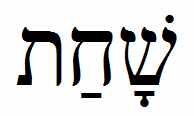
Click on Hebrew for commentary.
See also a simpler Christian midrash—
"Who Was the Mysterious Death Angel?"
Q— Why is Leaving Las Vegas different from all other movies?
A—

Hotel bedroom in Leaving Las Vegas (1995)
Midrash— Romancing the Junction and Damnation Morning—
"… this woman with the sigil on her forehead looked in on me from the open doorway of the hotel bedroom where I'd hidden myself and the bottles and asked me, 'Look, Buster, do you want to live?'"
On a conference at the New School for Social Research on Friday and Saturday, December 3rd and 4th, 2010—
"This conference is part of the early stages in the formation of a lexicon of political concepts. It will be the 5th in a series of conferences started in Tel Aviv University. The project is guided by one formal principle: we pose the Socratic question "what is x?", and by one theatrical principle: the concepts defined should be relevant to political thought…."
[The conference is not unrelated to the New York Times philosophy series "The Stone." Connoisseurs of coincidence— or, as Pynchon would have it, "chums of chance"— may read the conclusion of this series, titled "Stoned," in the light of the death on December 26th (St. Stephen's Day) of Matthew Lipman, creator of the "philosophy for children" movement. Many New York Times readers will, of course, be ignorant of the death by stoning of St. Stephen

Beloit College Nuremberg Chronicle
commemorated on December 26th. They should study Acts of the Apostles— Chapter 6 and Chapter 7.]
Meanwhile, in this journal—

For some background on the Dec. 4th link to "Damnation Morning," see "Why Me?"
For some political background, see "Bright Star"+"Dark Lady" in this journal.
* The title refers to a story by Fritz Leiber.
Today's Google logo
honors a serious artist:

Related material:
That post quotes the words of another serious artist,
Malcolm Lowry, on a barranca, or deep ravine.
(See also Heidegger's "rift" concept.)
For a less serious rift, see the art of Kylie Minogue.
From the front page of this
morning's online New York Times:


Stephen B. King,
a Hallmark creative director,
with some of the new
greeting cards based
on topical themes and humor.

When you care enough
to send the very best…
From a llnk to Aug. 1
in yesterday's entry:
Epiphany

Box-style I Ching, January 6, 1989
(Click on image for background.)
Detail:

Related material:
Logos and Logic
and Diagon Alley.
Cheap Epiphany
|
SPORTS OF THE TIMES
Restoring the Faith
By SELENA ROBERTS What good is a nadir if it's denied or ignored? What's the value of reaching the lowest of the low if it can't buy a cheap epiphany? |
|
Pennsylvania Lottery on the Feast of St. Ignatius Loyola: |
|

|

|
Restoring the Booze:
A Look at the 50's-

Another Epiphany:
Box-style I Ching, January 6, 1989
(Click on image for background.)
Detail:
Related material:
Logos and Logic
and Diagon Alley.
"What a swell
party this is."
— adapted from
Cole Porter
The Freshmen, Part II
From the Daily Princetonian,
Feb. 3, 2004:

Caption: Cate Edwards' Princeton friends support her and her father.
"… when Sen. John Edwards, father of Cate Edwards '04, decided to run for president, the troop of 17 students sacrificed tans and theses to pile into a fleet of minivans headed to New Hampshire….
These volunteers… were on a first name basis with the man who had helped them move into freshman dorm rooms and had discussed Senate votes with them over Chinese food."
From Chuck Polisher's
I Ching Lexicon:

"It's claimed that
if you take a mirror
and look backwards
into a well,
you'll see your future
down in the water."
— Cold Mountain,
Vintage paperback, 1998,
page 48
"Goin' to Carolina in my mind…"
— James Taylor
A Form
John Leonard in the June 10, 2004, New York Review of Books, on E. L. Doctorow:
"… he's got urgent things to say and seeks some form to say them in, or a form that will tease and torture secret meanings out of what he thinks he already knows, or a form, like a wishing well, down which to dream, scream, or drown."
The Well. The town may be changed,
But the well cannot be changed.
It neither decreases nor increases.
They come and go and draw from the well.
If one gets down almost to the water
And the rope does not go all the way,
Or the jug breaks, it brings misfortune.From the Book of Ecclesiastes 12:6—
or ever the silver cord be loosed, or the golden bowl be broken, or the pitcher be broken at the fountain, or the wheel broken at the cistern
From Chuck Polisher's I Ching Lexicon:
See also the following form, discussed in

Balanchine's Birthday
(1/9/03) and in

Art Theory
for Yom Kippur
(10/5/03)
Perichoresis, or Coinherence
Edward Gibbon, Decline and Fall of the Roman Empire, Chapter XXI —
Gibbon, discussing the theology of the Trinity, defines perichoresis as
“… the internal connection and spiritual penetration which indissolubly unites the divine persons59 ….
59 … The
or ‘circumincessio,’ is perhaps the deepest and darkest corner of the whole theological abyss.”
“Whoever fights monsters should see to it that in the process he does not become a monster. And when you look long into an abyss, the abyss also looks into you.”
Perichoresis does NOT mean “dancing around” ….
From a mailing list message:
If [a correspondent] will but open a lexicon, she will see that perichoresis (with a long o, omega) has nothing to do with “the Greek word for dance,” which is spelt with a short o (omicron). As a technical term in trinitarian theology, perichoresis means “interpenetration.”
Interpenetration in Arthur Machen
Interpenetration in T. S. Eliot:
“Between two worlds
become much like each other….”
On the Novels of Charles Williams
Coinherence in Charles Williams
The Per Speculum link is to a discussion of coinherence and the four last films of Kieslowski —
La Double Vie de Veronique (1991),
Trois Couleurs: Bleu (1993),
Trois Couleurs: Blanc (1993), and
Trois Couleurs: Rouge (1994).
See, too, previous log24 entries related to Kieslowski’s work and to coinherence:
Moulin Bleu (12/16/03),
Quarter to Three (12/20/03), and
White, Geometric, and Eternal (12/20/03).
Powered by WordPress