♫ Mirrors on the Ceiling . . .
♫ Pink Champagne on Ice . . .

Scholium:
* Zettel for a studio muse . . .
"You are the words, I am the tune . . .
Play me"
Two Zettel from January 6, 2018 . . .

The last line* of the previous post . . .
"See as well a search in this journal for Zettel ."
suggests another entertainment review —
"Interspersed with the surprisingly fruitful escapades
of these drunken detectives are a series of flashbacks
to Christmas 2007 . . . ."
— Rachel Aroesti in The Guardian ,
"Fri 29 Jul 2022 01.00 EDT,"
https://www.theguardian.com/tv-and-radio/
2022/jul/29/the-resort-peacock-now-funny-
fast-paced-caper-the-white-lotus
* Added at about 7:20 this morning. The relevant material is in
the last post from that search — dated December 26, 2007.
" 'Hotel California,' with its mysterious, allegorical lyrics,
became among the band’s best-known recordings.
It topped the Billboard Hot 100 in 1977 and won
a Grammy Award for record of the year in 1978."
— The New York Times tonight on an Eagles founding
member who reportedly died on Wednesday, July 26.
"Mirrors on the ceiling, pink champagne on ice . . . ."
See as well a search in this journal for Zettel .
From Zettel (repunctuated for clarity):
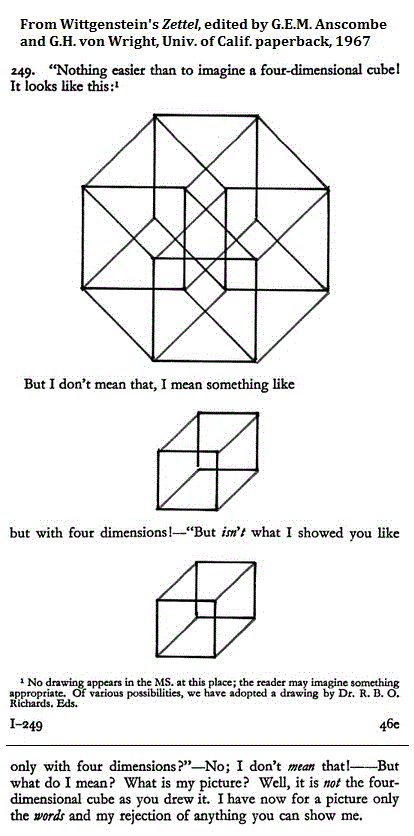
249. « Nichts leichter, als sich einen 4-dimensionalen Würfel
vorstellen! Er schaut so aus… »
"Nothing easier than to imagine a 4-dimensional cube!
It looks like this…
[Here the editor supplied a picture of a 4-dimensional cube
that was omitted by Wittgenstein in the original.]
« Aber das meine ich nicht, ich meine etwas wie…
"But I don't mean that, I mean something like…
…nur mit 4 Ausdehnungen! »
but with four dimensions!
« Aber das ist nicht, was ich dir gezeigt habe,
eben etwas wie…
"But isn't what I showed you like…
…nur mit 4 Ausdehnungen? »
…only with four dimensions?"
« Nein; das meine ich nicht! »
"No, I don't mean that!"
« Was aber meine ich? Was ist mein Bild?
Nun der 4-dimensionale Würfel, wie du ihn gezeichnet hast,
ist es nicht ! Ich habe jetzt als Bild nur die Worte und
die Ablehnung alles dessen, was du mir zeigen kanst. »
"But what do I mean? What is my picture?
Well, it is not the four-dimensional cube
as you drew it. I have now for a picture only
the words and my rejection of anything
you can show me."
"Here's your damn Bild , Ludwig —"
Context: The Galois Tesseract.
See also last night's "Pink Champagne on Ice" post.
The "ice" in that post's title refers to the white lines
forming a tesseract in the book cover's background—
"icy white and crystalline," as Johnny Mercer put it.
(A Tune for Josefine, Nov. 25.)
See also the tag Diamond Theory tesseract in this journal.
Related material —
* The title is a musical term…

The title refers to a post of April 26, 2009.
Detail from last night's 1.3 MB image
"Search for the Lost Tesseract"—

The lost tesseract appears here on the cover of Wittgenstein's
Zettel and, hidden in the form of a 4×4 array, as a subarray
of the Miracle Octad Generator on the cover of Griess's
Twelve Sporadic Groups and in a figure illustrating
the geometry of logic.
Another figure—
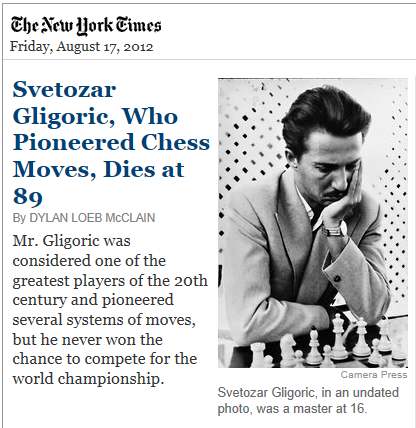
Gligoric died in Belgrade, Serbia, on Tuesday, August 14.
From this journal on that date—
"Visual forms, he thought, were solutions to
specific problems that come from specific needs."
— Michael Kimmelman in The New York Times
obituary of E. H. Gombrich (November 7th, 2001)
From this journal last Christmas—
Sunday, December 25, 2011Frage"Woher dieser Sprung von Endlichen zum Unendlichen? " — Wittgenstein, Zettel , § 273 Antwort— Accomplished in Steps and For 34th Street. See also Boundary Method. |
The "Boundary Method" link above leads to a Christmas Day obituary
for Maurice Jaswon, co-author of a book on color symmetry.
Those who prefer entertainment may consult the previous Christmas.
"Woher dieser Sprung von Endlichen zum Unendlichen? "
— Wittgenstein, Zettel , § 273
Antwort— Accomplished in Steps and For 34th Street.
See also Boundary Method.
(Continued from April 5, 2009)
"Thought can as it were fly , it doesn't have to walk."
— Ludwig Wittgenstein, Zettel , fragment 273
See also a related song.
See also the noir entry on "Nightmare Alley" for Winter Solstice 2002, as well as a solstice-related commentary on I Ching Hexagram 41, Decrease. |
Part II:
Language Game
on Christmas Day
Pennsylvania Lottery
December 25, 2007:

Part III:
A Wonderful Life
This verse is sometimes cited as influencing the Protestant conclusion of the Lord's Prayer:
"Thine is the kingdom, and the power, and the glory, forever" (Mt 6.13b; compare 1 Chr 29.11-13)….
This traditional epilogue to the Lord's prayer protects the petition for the coming of the kingdom from being understood as an exorcism, which we derive from the Jewish prayer, the Kaddish, which belonged at the time to the synagogical liturgy.
The Pennsylvania Lottery on Christmas evening paired 173 with the beastly number 0666. The latter number suggests that perhaps being "understood as an exorcism" might not, in this case, be such a bad thing. What, therefore, might "173" have to do with exorcism? A search in the context of the phrase "language games" yields a reference to Wittgenstein's Zettel, section 173:
From Charles L. Creegan, Wittgenstein and Kierkegaard:
Language-
games give general guidelines of the application of language. Wittgenstein suggests that there are innumerably many language- games: innumerably many kinds of use of the components of language.24 The grammar of the language- game influences the possible relations of words, and things, within that game. But the players may modify the rules gradually. Some utterances within a given language- game are applications; others are 'grammatical remarks' or definitions of what is or should be possible. (Hence Wittgenstein's remark, 'Theology as grammar'25 – the grammar of religion.) The idea of the 'form of life' is a reminder about even more basic phenomena. It is clearly bound up with the idea of language. (Language and 'form of life' are explicitly connected in four of the five passages from the Investigations in which the term 'form of life' appears.) Just as grammar is subject to change through language-
uses, so 'form of life' is subject to change through changes in language. (The Copernican revolution is a paradigm case of this.) Nevertheless, 'form of life' expresses a deeper level of 'agreement.' It is the level of 'what has to be accepted, the given.'26 This is an agreement prior to agreement in opinions and decisions. Not everything can be doubted or judged at once. This suggests that 'form of life' does not denote static phenomena of fixed scope. Rather, it serves to remind us of the general need for context in our activity of meaning. But the context of our meaning is a constantly changing mosaic involving both broad strokes and fine-
grained distinctions. The more commonly understood point of the 'Private Language Argument' – concerning the root of meaning in something public – comes into play here. But it is important to show just what public phenomenon Wittgenstein has in mind. He remarks: 'Only in the stream of thought and life do words have meaning.'27
- 24
- Investigations, sec. 23.
- 25
- Investigations, sec. 373; compare Zettel, sec. 717.
- 26
- Investigations, p. 226e.
- 27
- Zettel, sec. 173. The thought is expressed many times in similar words.
And from an earlier chapter of Creegan:
The 'possibility of religion' manifested itself in considerable reading of religious works, and this in a person who chose his reading matter very carefully. Drury's recollections include conversations about Thomas à Kempis, Samuel Johnson's Prayers, Karl Barth, and, many times, the New Testament, which Wittgenstein had clearly read often and thought about.25 Wittgenstein had also thought about what it would mean to be a Christian. Some time during the 1930s, he remarked to Drury: 'There is a sense in which you and I are both Christians.'26 In this context it is certainly worth noting that he had for a time said the Lord's Prayer each day.27
Wittgenstein's last words were: 'Tell them I've had a wonderful life!'28
- 25
- Drury (1981) 'Conversations with Wittgenstein,' in Ludwig Wittgenstein: Personal Recollections, pp. 112ff.
- 26
- Drury, 'Conversations,' p. 130.
- 27
- Drury, 'Some notes,' p. 109.
- 28
- Reported by Mrs. Bevan, the wife of the doctor in whose house Wittgenstein was staying. Malcolm, Memoir, p. 81.
Part IV:
For more on the Christmas evening
number of the beast, see Dec. 3:
"Santa's Polar Opposite?" —
Powered by WordPress